Now let’s look at the natural play of language and life, for it is only a play, like the happy innocent games of children.
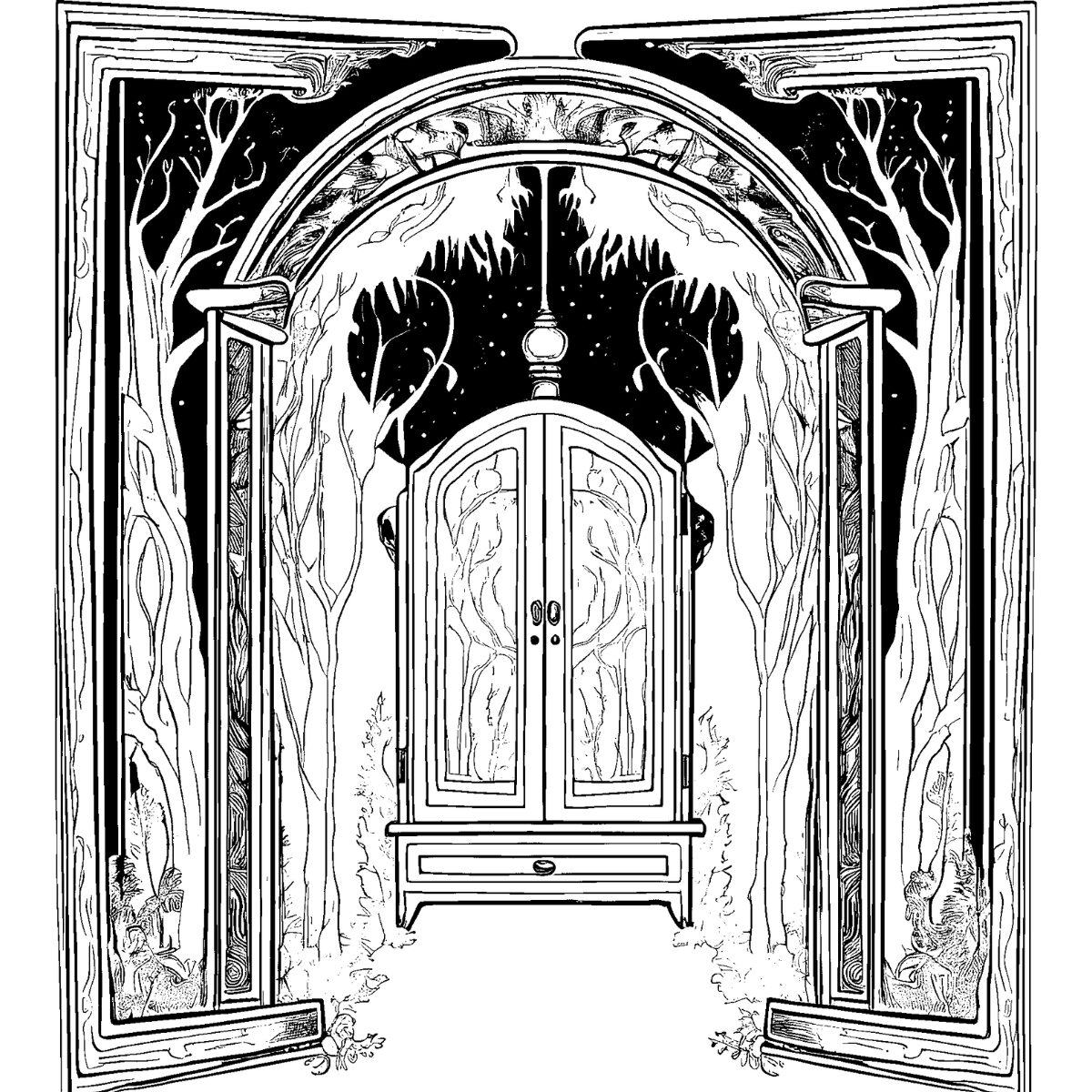
I come to this place to play my heart out. Like a child in the supreme confidence that my game role provides. I write into being the magnificent wunderkabinett. Sometimes when I come here, the cabinet is about to be delivered. It is an inheritance, and I welcome its arrival. Some days I find it in an old attic or basement, having been abandoned for decades. I clean it and prepare it for use. Other times it is standing nobly in place, and I put into it a special or significant object or symbol.
It has been left outdoors and the wood cracked in the cold. It has been covered in sandy dirt, lying in apple of uncollected junk in the back yard. It has been a home to mice and other wee animals. It has been a prized possession, but misunderstood. It has been standing in the same room for generations, holding everyday things – glassware, china, knickknacks. It was moved to a children’s room where it stored toys and fairy books. It looms, like a being in the dark. It crouches, like a tall animal wishing to appear smaller and less intimidating. It is English, or European, or Russian. It is said to be an exact replica of a Chinese cabinet. There is one much like it in Turkey. Another in Mexico. The doors are glass on top shelves but solid on the bottom shelves. There is a drawer between them. The wood veneer is artfully placed and decorative, Rorscach-looking.
It is not the form that fascinates me each time I come here to play. It is the contents. It is its function. It is its presence, its existence at all.
Why do I love to see it, to envision all the remarkable contents, to examine all it holds as each is a treasure, rare and exquisite? How can we explain its radiant transformation? The white samite cloth, carefully folded, once laid in the drawer of this very cabinet. “That samite was used to cover the very grail, mark my words, miss.”
Most of the rare and holy objects have, at one time or another, been held in this cabinet. You might ask how this can be. It is simple: this is a magic cabinet, of course. It can be in existence anywhere and any time. It can hold infinite volumes, goods of all sorts. There is no limit to what can be stored here.
It is also possible to go into it as if it were a large mansion, palace or temple. In that case, most explorers enter from the lower doors, making their way up through the stories into the glass-doored part above.
It is possible to stand on the top as if on a castle promontory and survey the lands surrounding.
Some tell of entering the cabinet/castle/temple/land when it is lying down on its back.They find a way in. Mouse-guided, small helpers? For naturally there can be doors which cannot be seen under ordinary circumstances.
What we must always remember is that we needn’t travel here using the bulky bodies we assume to be ourselves. It is much more efficient to go direct in mind without the body’s encumbrance. In this case the cabinet is extremely helpful as a locus of action – a place to focus the self.
After creating the other magical body that can come and go at will and then transferring action and a sense of identity into that replica “self” made of mind-stuff, then the perfect explorer can have a cabinet as a base. Some say it is like the Tardis of Dr. Who, and that is possibly resonant with what I am referring to here.
Once in a while others may be seen in the reflection in the glass, in the shine on the shimmering silver goblets. However, these are radiant and fragmented aspects of the self. This akasha in which the cabinet is held has no others in it. It is mine and mine alone.
The cabinet is my boat across the dark river. The cabinet is my coffin. Yet it is populated by me and me alone, in infinite variation. It holds the greatest and deepest meanings in its symbolic magical objects. Here I come to play with these most meaningful toys.